 By Santosh Kumar
 If any market in India can claim to have a genuine counterculture origin story, it is Anjuna Flea Market. Born from the bohemian hippie movement that washed onto Goa’s shores in the 1960s and 1970s, this weekly market on the northern Goa coastline grew from an informal gathering of travellers selling their belongings to fund their wandering lives into one of the most famous and atmospheric open-air markets in Asia. Decades later, with the hippies long gone and Instagram well and truly arrived, Anjuna Flea Market has evolved and commercialised but never entirely lost the free-spirited, anything-goes energy that gave it life in the first place.
The market is known for handicrafts, jewellery, clothing, leather goods, spices, Goan souvenirs, antiques, textiles, and a lively food and music scene. It draws domestic tourists, foreign travellers, expats living in Goa, and local traders from across North Goa. Anjuna Flea Market is located on Anjuna Beach in North Goa, with the pin code 403509.
History of Anjuna Flea Market Goa
Anjuna’s story as a market destination begins with Goa’s emergence as a global hippie haven in the late 1960s. Western travellers, many following the overland route from Europe through Iran, Afghanistan, and India, began settling along Goa’s northern beaches for months at a time, drawn by the warm climate, cheap living, and the liberating atmosphere of a territory that had only recently been incorporated into India after Portuguese colonial rule ended in 1961.
Anjuna Beach became one of the focal points of this community. As travellers ran low on money, they began selling their possessions — clothes, jewellery, cameras, books, and personal items — to fellow travellers and curious locals in informal gatherings on the beach. These gatherings gradually became a regular Wednesday fixture and the Anjuna Flea Market was effectively born not through any commercial planning but through the organic necessity of people trying to stay on the road a little longer.
Through the 1970s and 1980s the market grew as Goa’s reputation as a traveller destination deepened. Kashmiri traders, Tibetan refugees selling handicrafts, Rajasthani textile merchants, and local Goan vendors joined the original traveller sellers, expanding the product variety and commercial scale of the market significantly. By the 1990s Anjuna Flea Market had become a well-known destination in its own right, drawing visitors who came specifically to experience the market rather than just happening upon it.
The market has continued evolving through the 2000s and 2010s as Goa’s tourism profile shifted from backpacker bohemia toward mainstream domestic tourism. The original flea market character has diluted somewhat as commercial vendors have come to dominate, but the Wednesday market at Anjuna retains enough of its original spirit and variety to remain one of Goa’s most visited and talked-about experiences.
Location of Anjuna Flea Market Goa
Anjuna Flea Market is located on the southern end of Anjuna Beach in North Goa, set up on the rocky and open ground adjacent to the shoreline. The area falls under the North Goa district and the Bardez taluka. The pin code for the area is 403509.
The beach setting is fundamental to the market’s atmosphere. Unlike urban markets enclosed by buildings and lanes, Anjuna Flea Market operates in the open air with the Arabian Sea visible in the background, sea breeze moving through the stalls, and the sound of the ocean as a constant backdrop. This physical setting gives the market an experience quality that no indoor market can replicate.
Anjuna is located approximately 18 kilometres from Panaji, the state capital, and about 8 kilometres from the popular tourist hub of Calangute. The area is well connected to the broader North Goa tourist circuit and most visitors arrive by scooter, taxi, or tourist bus from their accommodation in Calangute, Baga, Vagator, or Panaji.
Shops in Anjuna Flea Market Goa
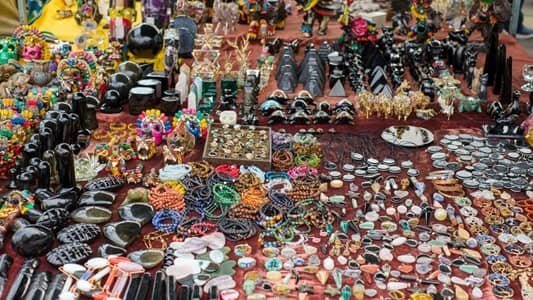
Anjuna Flea Market spreads across a large open ground with hundreds of stalls and vendors arranged in loose rows. The market includes handicraft sellers, silver and beaded jewellery stalls, clothing and textile vendors, leather goods makers, Rajasthani and Kashmiri craft dealers, Tibetan artefact and jewellery sellers, spice vendors, Goan souvenir and shell craft stalls, antique and vintage item dealers, tattoo artists, henna artists, coconut and fresh juice vendors, and a lively food section with shacks serving Goan, Indian, and international cuisine.
The jewellery section is one of the most extensive and popular parts of the market. Silver jewellery in tribal, bohemian, and contemporary designs, beaded necklaces, stone-set rings, and handmade bracelets attract buyers who want unique pieces at prices significantly lower than jewellery stores. Many pieces are handmade by the vendors themselves, particularly those from Rajasthan and tribal craft communities.
The clothing section carries a mix of Goan printed beach wear, Rajasthani block-printed fabrics, tie-dye garments, bohemian dresses and tops, and casual clothing suited to beach holiday wardrobes. Leather goods stalls offer handmade bags, sandals, belts, and accessories, some made on site by craftspeople who set up their tools alongside their display.
What Is Anjuna Flea Market Goa Famous For?
Anjuna Flea Market is most famous for its atmosphere and its jewellery and handicraft trade. The combination of beachside setting, eclectic product variety, and the lingering bohemian character of Anjuna itself creates an experience that buyers remember as much as any specific purchase they make.
Apart from jewellery and handicrafts, the market is also known for:
- Silver and tribal jewellery
- Rajasthani textiles and block prints
- Leather bags and handmade sandals
- Tibetan and Buddhist artefacts
- Goan spices and cashews
- Antique and vintage collectibles
- Bohemian and beach clothing
- Henna and temporary tattoo artists
- Fresh Goan seafood and beach food
- Live music and open-air dining
Goa’s identity as India’s most internationally influenced coastal state gives its markets a flavour that is genuinely unlike any other market in the country. Anjuna Flea Market sits at the centre of that flavour, offering a product mix that reflects decades of cultural exchange between Indian craft traditions and the tastes of international travellers.
Market Timings and Best Time to Visit
Anjuna Flea Market operates only on Wednesdays. The market typically begins setting up from around 8:00 AM and trading activity runs through the day until approximately 6:00 PM or sunset. The market is an outdoor event and operating hours are influenced by weather, particularly during the monsoon season when North Goa receives very heavy rainfall and market activity slows significantly or pauses.
The best time to visit is between November and February when Goa’s weather is at its most pleasant, the tourist season is at its peak, and the market operates at full scale with maximum vendor and buyer participation. Morning visits between 9:00 AM and 12:00 PM are recommended for cooler temperatures and the opportunity to browse before the afternoon crowds arrive. Carrying cash is essential as most vendors do not accept cards or digital payments.
How to Reach Anjuna Flea Market Goa
Anjuna Flea Market is most commonly reached by renting a scooter or motorcycle, which is the standard mode of transport for independent travellers in North Goa. From Calangute and Baga, the drive to Anjuna takes approximately fifteen to twenty minutes on the coastal road. From Panaji, a taxi or scooter ride takes around thirty to forty minutes. From Goa International Airport in Dabolim, a taxi covers the distance in approximately one hour depending on traffic. Tourist taxis and app-based cabs are available from most North Goa accommodation areas on Wednesday mornings specifically for market visitors.
Nearby Places
Anjuna Flea Market is surrounded by some of North Goa’s most popular beaches and destinations. Nearby places include Anjuna Beach itself, Vagator Beach, Chapora Fort, Baga Beach, Calangute Beach, Mapusa Friday Market, Morjim Beach, and the cluster of beach shacks, restaurants, and cafes that make up North Goa’s tourist trail. Many visitors combine a Wednesday trip to Anjuna Flea Market with an afternoon on Vagator or Anjuna Beach and an evening at one of the area’s beach restaurants.
Final Words
Anjuna Flea Market is one of those rare places where the origin story still echoes in the present experience. The hippies who started selling their belongings on this beach to fund another few weeks in paradise could not have imagined what it would become — but they would probably still recognise something of their spirit in the Wednesday gathering that continues to draw wanderers, buyers, and curious visitors to the Anjuna shoreline decades later. For anyone visiting Goa, a Wednesday at Anjuna is not just a market trip but a small encounter with one of the most unusual and genuinely storied commercial traditions in India.